10.17.2007

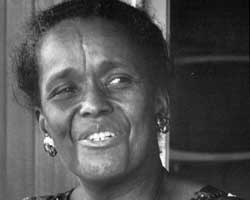
A Greener Eph: Ella Baker on Organizing

For Ella Baker, the increased reliance on the press and th need of leaders for public recognition was a common element in the degeneration of social movement, a part of the pattern by which initially progressive American movements have traditionally been
rendered ineffective. She contended that the labor movement had succumbed to what she called the American weakness of receiving some recognition from the powers that be and then taking on some of the characteristics and values of their former enemies. Similarly, in the NAACP of the forties and fifties, she thought that the thirst for
recognition was one of the factors leading to accommodationist politics at a time when many of the members were ready for a more militant program. Too many leaders thought that as long as they were getting some attention from the press, as long as they could call important whites on the phone, the Race was making progress. In the
1960s, she thought that some Black Power spokespersons became so enamored of the coverage they were receiving from the press as to begin performing for the press. ...

The substance of Black Power didn't trouble her; the lack of organizing did. She noted that she had seen Carmichael explain Black Power in ways that should have made sense to any person willing to look at the facts.

"But this began to be taken up, you see, by youngsters who had not gone through any experiences of any steps of thinking and it did become a slogan, much more of a slogan, and the rhetoric was far in advance of the organization for achieving that which you say you're out to achieve. What was needed was a greater
degree of real concentration on organizing people. I keep bringing this up. I'm sorry, but it's part of me. I just don't see anything to be substituted for having people understand their position and understand their potential power and how to use it. This can only be done, as I see it, through the long route, almost, of actually
organizing people in small groups and parlaying those groups into larger groups."


I've Got the Light of Freedom, Charles Payne

10.10.2007

A greener Eph: Power Shift 2007


If you haven't checked out the website, there's tons of info about the schedule,
talks, trainings and generally how awesome it will be. http://www.powershift2007.org You can also see who else from Williams is interested in going so far on the facebook group Power Shift - Williamstown.

As a climate activist here, a big priority for the year is getting a lot of students to DC for this event. Of course its important nationally for this conference to have a huge turnout, because that shows the strength of our movement, but there are also a lot of reasons why Williams students will get a lot out of this.

First, we live in the purple bubble. Its often hard to feel like we're doing anything significant when we don't see what's going on at other schools or what other students like us are working on. We're not the only ones, but we don't always see our peers.

Second, conferences get people excited. I come away from every conference even more excited about the possibilities for work, connections to be made, new arguments to talk about and a greater sense of the urgency of the climate crisis. Its often not the key-note speakers, but the random conversations in hallways, friends of friends, or hearing the questions/frustrations/experiences of other attendees. I thrive off that kind of excitement, and I think a lot of other people can get into this that way.

Third: trainings. It takes lots of skills to be an effective activist. No one wants to be an ineffective activist, but without the how-to knowledge of leadership, organizations, press, budgets, lobbying, recruitment, etc, a lot of people just get really frustrated. A lot of this weekend will be this type of skills training. We pay a lot for a Williams education, but you'll be shocked to find out how much you can learn in a weekend (and things taught by other students or recent students, too!).

Fourth, this weekend is going to be historic. I have a feeling that you'll be able to tell your grand-kids that you were at one of the major tipping points in the battle for citizens to have a voice in how the world is run, when we finally started to take power into our own hands the way a democracy should be run. There's a feeling that I'm getting from people that its time for a change.

So that was probably more intense than you were looking for. It'll mostly be really fun.

10.09.2007

Hamburgers


Winning a campus victory is nothing more than a hamburger.

"More Than a Hamburger" went a speech by Ella Baker at the founding conference of the Student Non-violent Coordinating Committee, or SNCC. The organization went on to lead the most radical, militant and successful non-violent protests to break the back of the Jim Crow south, but in April of 1960 the participants at this conference were rookies, fresh with the pride of victory. They had started doing sit-ins only three months before, and the wave of spontaneous protest had spread across the south. Now they assembled at the first conference many had ever been to, and had to decide what to do. Baker desperately wanted the students to see their recent victories as a wedge to pry open much broader and more difficult problems for Blacks.

In the hind-sight of history, we often forget that great things have auspicious, even uncertain beginnings. The chance that these students would succeed in creating a strong and dynamic organization with enough independence to actually be radical was not good. Older civil rights activists schemed about how to co opt the students. The students themselves didn't have a focus or a direction. Julian Bond remembered, "to our mind, lunch-counter segregation was the greatest evil facing black people in the country."

Young people in SNCC saw two kinds of goals. First was the final goal of equality and freedom. Equal protection under the law, safety from discrimination and intimidation, respect, opportunity, etc. I can only speculate that even the students who had recently desegregated their lunch-counters didn't imagine all these things as immediate goals, or even ones they would see in their life-times, but I bet for the first time in their lives they were considering these to be possible. Nonetheless, the end goals were fairly established, barring somewhat fringe debates over returning to Africa or specific retaliations against whites.

The second goal that most of these students saw clearly was desegregation. They had seen the problem, they had a ready made goal (to be able to sit in some place) and they had shown bravery in reaching that goal. Unfortunately, they were quickly realizing desegregated lunch counters were only a little bit closer to an end of racism than before.

The climate movement is stuffed full of "hamburger" actions. We've heard the list of personal actions time and time again. If you're reading this, you already have the good lights, your probably a vegetarian and you don't go joyriding in your 4x4 truck. There is another kind of hamburger out there. Campus Climate Challenge victories, signatures on the President Climate Commitment and clean energy purchasing fees are also just lunch-counters. Very important, but definitely not intermediate goals.

There is a huge disconnect between the big, giant problem of climate change, and the tiny solutions we offer to individuals or small groups. Of course we need small actions to hook people into taking bigger ones. Whether its switching to a high-fuel economy car or getting a group together to lobby your administration, these are still just steps that get more involved and invested experienced so we can take on bigger things.

The other reason we're afraid of intermediate goals is their complexity. Intermediate goals require collaboration with other organizations. They require us to trust groups that we haven't worked with before, and they require us to ask much harder questions about strategy - what will be most effective? Does a march do more for the climate than signing up 10,000 customers for clean energy?

I applaud efforts in several states to establish action-oriented state networks. I am fascinated by where some schools have gone after achieving a significant victory - expanding the activism and vitality out into the community like in MaCalister and Middlebury. But I feel that this is a key time for our movement because we do need to shift from primarily working with student groups on campuses to engaging a much broader and more diverse society, but doing so in a way that brings more focus on ambitious but achievable goals.

We're moving beyond hamburgers. They're important, we're earned them, but don't kid yourself for a moment into thinking that was the easy part...or the tipping point.

Sources: I've Got the Light of Freedom, Charles Payne

Note: This essay is the second in a six part exploration into campus organizing. The study will focus on applying organizing theory and experience to the day-to-day challenges of building the youth climate movement at Williams College, in Berkshire County and in the state of Massachusetts.

10.08.2007

A Green Eph: Visit to Middlebury


SUNDAY NIGHT GROUP is the climate activism group at Middlebury. Only about 3 years old, SNG has transformed the campus into a hotbed of national climate action. One year ago SNG was the inspiration for Williams TNG - we even copied the name. Having heard about SNG for so long, and spent loads of energy for the past year trying to emulate it, I finally had a chance to attend a meeting.

Being reading period, we don't have class on Monday or Tuesday. Three of us drove up last night and met Sierra, a junior and leader of the group. We had dinner and then headed up to the gathering. About 55 people filled a big living room, with some beer in the middle of the circle and chatted for a while. The meeting started with rhythmic clapping which spread and quieted the conversation. Everyone went around saying their name and the answer to a random question they had thought of in their head. I said Ella Baker.

There was a period of announcements about events, news, and fun facts, including one from a community member. Then project groups were announced and things split up. Groups consisted of a 'kick the bottle' campaign against bottled water, a mock-presidential debate on the climate, a group working on campus lighting, and another on solar heating for dorms.

I sat in the presidential debate group, which was in its second week, planning an event 2 1/2 weeks out. They divided up roles and brainstormed actors who could fill the roles. The campus improv group was decided upon. Publicity, scripts, location and logistics were all taken care of in a few minutes each.

Then clapping brought everyone back together again, and the circle reformed, standing, to do a quick 'shake-it-to-the-left' dance/song.

I liked clapping as a means of bringing the group in, as opposed to one person shouting (communal vs. individual), and consequently there wasn't nearly as much feel of someone facilitating the meeting. I was most impressed by how readily people volunteered for roles. The expectation of doing work on projects independently, outside of meetings was very strong. And I loved how accepted the song was at the end.

Lots of thoughts here for TNG, but at the same time I don't feel we need to copy it even more - every campus is different. Sierra felt that Middlebury students really respond to the chill atmosphere and the non-hierarchical nature of the group. My feeling is that Williams students respond to a more professional atmosphere, even if it seems chill and relaxed on the surface.

The bottom line: both groups major strength is an emphasis on getting things done and promoting leadership in every member. A bunch of them are coming down on Thursday to see Michael Pollen, and then staying for TNG. It'll be sweet to compare notes.

10.06.2007

A Greener Eph: Names are important

TNG is now officially Thursday Night Grassroots. After a brainstorming session, the co-chairs talked about what we need in a name.

We need something that is not off-putting, or assigns us some automatic identity. But we also need something that has some description of what we do - grassroots activism. Its cumbersome to recruit new members or make connections with the greater community when we have to explain who we are and why we have such a unique name. On the other hand, TNG is a strong identity on campus already, and we definitely didn't want to change that.

Thus, we arrive at Thursday Night Grassroots. Comments are welcome, but it looks like the name will slowly come into usage. Unfortunately, I can't change the name of the facebook group without having to create a new one. That might be around for a while.

10.03.2007

A Greener Eph: Localize it!

Local economies are sweet. I've been biking three miles out to a farm one morning a week to harvest vegetables. I get paid in produce. I don't consume fossil fuels, I get freakin' sweet tasting food, and I get to know a farmer who has a 35 year living relationship with this place.


Zoe and Farmer Bill peeling squash in the barn

Normally I don't get too worked up about food. If it tastes good, sweet, if not, then I eat it anyway because I'm hungry. But this food really tastes good! Maybe it has something to do with picking it myself and knowing where it comes from? Any psychology majors out there want to comment?

Normally this blog does not advocate personal reduction in carbon footprints. It is more important to lobby your senator or organize a political event than bring a cloth bag to the store. I'm sorry, but there are enough people out there encouraging personal savings and that's only half the equation. The other half gets left out because its harder, because its bolder, because it is less tangible and feels less self-righteous. We will never have a sustainable society without a much more active and political citizenry.

BUT... It feels really damn good to work on the farm. Maybe its partly mental health, maybe its a meditative kind of manual labor that helps me think. Or maybe there's some deeper instinct within us that needs to be close to where our food comes from, that feels the things we pick, the landscape we live in, the cycles of weather and the fresh air.

After Thursday Night Group gatherings, working on the farm is often my most satisfying time of the week. That's a pretty good reason to do it. A carbon-free source of food is a nice bonus.

10.01.2007

A Greener Eph: Powershift and Step it UP

A day is looming on the near horizon of the climate movement. November 3rd will be the biggest day of action we have ever seen, but it will be big because we will be split.

Step it UP Berkshires is going to be held at some combination of Jiminy Peak and Williams. Powershift , the first ever national youth climate conference is at the University of MD for that weekend.

I had a lot of trouble deciding what to do about this weekend, since both are really awesome. But now that Thursday Night Group has swelled to a much larger membership, we see a much stronger group, one that can split its energies into making two events happen. I don't think it will be that hard to get 15 students down to MD for a long weekend (Friday morning to Monday night), and still have enough organizers and interested students in town to get a big turnout for Step it up.

So Williams is sending a team to Powershift.

9.25.2007

A Greener Eph: Leadership


Group centered leaders facilitate social movements. But who are they? In some ways they are merely receptors of all the external demands that a group of people makes, but even by receiving that energy they are doing a rare thing. By being open to ideas, to whims, to insights and to diversity of background and thought, a group centered leader is a focal point around which restless energy can be organized and turned into motion.

I came across a conception of leadership very different from the one we usually think of. Sociologist Kai Erikson writes about the a terrible coal mining catastrophe in Buffalo Creek, West Virginia. In 1972 a poorly made slurry damn broke at the head of a 17 mile creek on which 5,000 people lived, mostly coal miners and their families. Roughly 125 people lost their lives and 4,000 residents were left at least temporarily homeless. Understanding why this catastrophe was not avoided means delving into the community of Buffalo Creek as it existed before the slurry dam broke.

The community was described as very tight knit, with family and neighborly ties running deeper than anything most of us know in our transient and wired lives. Why didn't the community rally behind the men who knew something was wrong? Social norms pressured many residents not to 'rise above the rest', not to name oneself as somehow different from one's neighbors, not to have audacity. Although 'individuality' is one of the most common traits ascribed to people from Buffalo Creek by outsiders, traits commonly seen as 'individualistic', or internally generated, really result from restrictive social roles. While a father is often seen as unquestioned head of his family, he isn't entirely acting on 'his own whim', he is also answering an external demand of a role to fill. None of these supposedly individualistic and free thinking men stepped up to show leadership outside of social norms.

Only after the disaster did some leaders start to show themselves, but at the utmost reluctance. Erikson quotes George Santayana:

Perhaps in the flight of birds...the leader was not really a bold spirit trusting to his own initiative and hypnotizing the flock to follow him in his deliberate gyrations. Perhaps the leader was the blindest, the most dependent of the swarm, pecked in to taking wing before the others and then pressed and chased and driven by a thousand hissing cries and fierce glances whipping him on. Perhaps those majestic sweeps of his, and those sudden drops and turns which seemed so joyously capricious, were really helpless effects, desperate escapes, in an induced somnambulism and universal persecution. Well, this sort of servitude was envied by all the world; at least it was a crowned slavery, and not intolerable. Why not gladly be the creature of universal will, and taste in oneself the quintessence of a general life. After all, there might be nothing to choose between seeming to command and seeming to obey...


The leader is revered for taking this sacrifice upon herself, and the group responds. However, after the initial thrust is made, and it is so very difficult to make, the burden can be shared. Ella Baker informs us of this imperative as no one else can:
“I have always thought that what is needed is not the development of people who are interested in being leaders as much as in developing leadership in others.”
A leader serves the demands of the group by encouraging more leaders.

Is it possible that effective campus leaders are merely conceding to the pecking and hissing cries of those around them? Is it possible that instead of deciding to lead community members into becoming a goal-oriented activist group, and pouring their hearts into the service of that group, they are merely answering and offering themselves up to the whims of the crowd that wants something too vague to name themselves?

Saul Alinsky tells the organizer to give people a sense of their own power, create concrete and meaningful changes in people's lives,and change the balance of power. College students are seeking a sense of their own power everywhere, but in so many cases we do not know what that kind of power actually means. As youth preparing to enter the adult world, we're trying to put ourselves into meaningful positions in that world. But what about the second principle?

Many (but not all) college students live some of the most comfortable lives in the world. We have every want near at hand, from food to friends, to fun. We have a purpose and rhythm to our days, and we have the optimism of being at the beginning of life and largely untested. What sort of meaningful and tangible improvement in our fellow students' lives can we possibly hope to achieve? We can offer them a medium to express their passion, their sincere hope for a better world.

School creates a world where work, studying, skills and sometimes even ideas are important. But for some students, for the ones that are potential activists, the ones who want something more, class and activities can be frustratingly tedious. Some students start to realize that many professors do not share our vision of a better world, do not confront the connection between talking and doing. These students are on the cusp of allowing themselves to be thrust into leadership.

First and foremost, effective student leaders, group centered leaders care about the world that fellow students want to see. They are at the whims of that vision. That is how a leader creates a community where passion and vision are important. That is a meaningful change in students lives. Lets keep building groups where students passion for a just, peaceful and sustainable world is our guide.

References:
1. George Santayana, The Last Puritan, pp. 128-129
2. Saul Alinsky, Rules for Radicals
3. Clayborne Carson, In Struggle
4. Kai Erikson, Everything in its Path
5. Baker, Developing Community Leadership, pp 347, quoted in Charles Payne, I've got the Light of Freedom.

Note: This essay is the first of a six part exploration into campus organizing. The study will focus on applying organizing theory and experience to the day-to-day challenges of building the youth climate movement at Williams College, in Berkshire County and in the state of Massachusetts.

A Greener Eph: North Adams Hearing

Today Williams students turned out in force to support Senator Pacheco's Global Warming Solutions Act. Along with Senator Downing (dem - Berkshires), the senator is touring the state to hear testimony from community and business leaders on what should go into the bill.

35 Williams students made the trek across the great divide, the 4 miles from Williamstown to North Adams. Thursday Night Group showed its incredible capacity and skills in getting such a high turnout to an event this far away in the middle of a school day. Generally, the students who attended were really excited at being so close to real political work and hearing the discussion on the issue.

In addition to a high turnout, the hearing was also exciting for me because I suddenly became motivated to address the senators. During the final minutes of the hearing, I got up to the mic and asked the senators to include the words, "Green Jobs Training Program" in the legislation. He said he definitely would. This is partly a mimicking of how Van Jones got similar language into Nancy Pelosi's bill this summer. I felt like an imitator, but an imitator of the most amazing person I know of.

Today was also important for network building, making contacts with students at MCLA, state environmental leaders and staff members of the senate committee on global warming. All in all, a pretty great day.

9.24.2007

A Greener Eph: MYCA


On Sunday four Williams students and one Mt. Greylock student attended the kick-off summit of Massachusetts Youth Climate Action, or MYCA.

I worked with five other SSC people to get this conference to happen, and it turned out to be a huge success. Instead of a conference to come share skills and get inspired from speeches, this was a conference for planning. Our 7 hour marathon meeting resulted in an amazing campaign plan and an organizational structure. We're off and rolling.

We decided on a campaign goal of passing the Global Warming Solutions act with language about Green Jobs and No New Coal. After that, we move on to bigger things.

Sasha, Adam, Adriann, Davy and I drove in a college Prius all the way there, listening to Regina Spektor. Driving home, still listening to Regina Spector, we were all bubbling from excitement from the conference. How crazy is it for 40 students to get together in a room somewhere and decide to shape the way we deal with global warming in our state.

Getting home was punctuated by a jump in the Green river, of course, before heading off to the inevitable stack of emails and homework. Ah, Williams.

9.22.2007

A Greener Eph: $5 Million from Zilkha

To the Williams Community,

I am very pleased to announce the next important step in our effort to make College operations environmentally sustainable — the launching of a center to lead those initiatives, funded by a wonderfully generous gift of $5 million from Selim Zilkha, Class of 1946. full text


So starts a letter to the campus from president Morty. What does $5 million mean for the campus?

The Zilkha Center for Environmental Initiatives will work with students, faculty, and staff to incorporate principles of sustainability into the fabric of campus life — in learning, in our purchasing and operations, in capital projects, and in the daily routines of us all. It will lead the development and management of a strategic plan for sustainability to include energy management and greenhouse gas emissions reductions, waste management, environment-friendly development and purchasing, and student involvement and education. This work will complement the already strong academic programs of our longstanding Center for Environmental Studies.


The money goes to the endowment, which means we can spend about 5% annually - $250,000. Presumably this money is not to be used for actual upgrades, renovations or physical improvements, but instead fund staff and programs.

Implications: The college needs to hire more people to work in this office. The hiring cap, which has prevented any number of departments from expanding, will obviously need to be bent here. If we're talking about staff, $250,000 works out to a lot of people, especially if some of those people are low-paid student interns.

'Learning, purchasing and operations, [and] capital projects' are really important. Will this mean we can offer more course that teach students how to be successful leaders in a world that is dealing with climate change? Purchasing and operations will surely result in campus policy, and we can help in writing that policy. Roosevelt institution anyone? Capital projects means working with the trustees, big donors, and mostly the long-term planning committees like the CPR. This office will certainly be represented on those.

'Development and management of a strategic plan for sustainability.' Yes, and its long overdue if you ask me.

Without this office, we're already doing pretty well. We've made good strides in dining services operations, energy use in dorms and our construction practices. We should count these as successes, but with success we must expand the scope of our goals. A gigantic contribution to Williams' carbon footprint is the air-travel that is done by classes, students on vacation or going/coming home, and all the travel required to operate a board of directors, send people to national conferences, etc. If we want to make headlines (the school doesn't, the students do), then we should begin to address these much more challenging goals.

Or are we only going to set targets that are low but achievable?

9.18.2007

A Greener Eph: Group Centered Leaders (draft)


Group centered leaders facilitate social movements. In some ways they are merely receptors of all the external demands that a group of people makes, but even by receiving that energy they are doing a rare thing. By being open to ideas, to whims, to insights and to diversity, a group centered leader creates a group and gives the group a focal point which can then be pushed.

I came across a conception of leadership very different from the one we usually think of, but it really struck me. The book is written by a sociologist, Kai Erikson, about the coal mining catastrophe in Buffalo Creek in 1972. A critical piece of understanding why this catastrophe was not avoided meant delving into the community as it existed before the slurry dam broke.

The community was described as very tight knit, with family and neighborly ties running deeper than anything most of us know in our transient and wired lives. How then, did the community not rally behind the men who knew something was wrong? There was intense pressure from social norms not to 'rise above the rest', not to name oneself as somehow different from one's neighbors, not to have audacity. It seems odd that 'individuality' is one of the most common traits ascribed to people from Buffalo Creek, but the author points out that things commonly seen as individualistic. A father as being unquestioned head of his family does not necessarily mean he is acting on his own whim so much as answering an outer demand of a role to fill. With social norms like these, leadership can only mean answering to outer demands in a reluctant manner.

The Erikson quotes George Santayana:

Perhaps in the flight of birds...the leader was not really a bold spirit trusting to his own initiative and hypnotizing the flock to follow him in his deliberate gyrations. Perhaps the leader was the blindest, the most dependent of the swarm, pecked in to taking wing before the others and then pressed and chased and driven by a thousand hissing cries and fierce glances whipping him on. Perhaps those majestic sweeps of his, and those sudden drops and turns which seemed so joyously capricious, were really helpless effects, desperate escapes, in an induced somnambulism and universal persecution. Well, this sort of servitude was envied by all the world; at least it was a crowned slavery, and not intolerable. Why not gladly be the creature of universal will, and taste in oneself the quintessence of a general life. After all, there might be nothing to choose between seeming to command and seeming to obey...


Is it possible that campus leaders are merely obeying the pecking and hissing cries of those around them? Is it possible that instead of deciding as an individual to build an activist group, and pour their hearts into that group, they are merely answering and offering ourselves up to the whim's of the crowd?

Every time a fellow student tells me about an idea for a project, I get excited. Sure, they're not all good projects, let alone great ones, but they are not asking me about a specific project, they are asking for confirmation of a role in their community which is rarely offered. The role of their passion. When a person goes from feeling like their contribution is unwelcome, to feeling like they can make things better, then they join the real community. It is our job to make sure they have a community to join.

Saul Alinsky tells the organizer to give people a sense of their own power, create concrete and meaningful changes in people's lives,and change the balance of power. College students are seeking a sense of their own power everywhere, but in so many cases we do not know what that kind of power actually means. Youth are positioned to seek a change in the balance of power, even when we don't know what we mean by power, and because we are seeking to break into the world of adults who have power.

While the above two points deserve a lot more attention, I think the second point is most worth expanding. College students live some of the most comfortable lives possible. We have every want near at hand, from food to friends, to fun. We have a purpose to our days (class and maybe sports), and we have the optimism of being at the beginning of life and largely untested. What sort of meaningful and tangible improvement in our fellow students' lives can we possibly hope to achieve? We can offer them a confirmation. School creates a world where your work, your studying, your skills and sometimes even your ideas are important. Student leaders can create a world where your passion and vision is important. That is a meaningful change in students lives, and we can only create this community with group centered leaders.

References:
1. George Santayana, The Last Puritan (NY Scribner's, 1936), pp. 128-129
2. Saul Alinsky, Rules for Radicals
3. Clayborne Carson, In Struggle
4. Kai Erikson, Everything in its path

Note: This essay is the first of a six part series I am writing this semester for an independent study. The study will focus on applying organizing theory and experience to the day-to-day challenges of building the youth climate movement a Williams College, in Berkshire County and the state of Massachusetts.

9.14.2007

TNG - what does fighting global warming mean?

Note: This post is originally posted on Ephblog.com, hence the David Kane references. Sorry for the length

92 people attended the first gathering of Thursday Night Group this week. 23 people participated in our overnight leadership retreat to set the agenda and goals for the year. This isn't the kind of activism we've seen at Williams in the recent past (DK, I'm counting on you to prove me wrong here somehow.)

Why is our group so energized this year, and where is all of this going to lead?

1. The college has made a commitment which is starting to filter down through all levels of our community. My econ professor uses climate change regularly as an example of a market externality. The Bell Book was revised, telling all frosh to bring CFLs and not fridges. Security purchased a hybrid patrol vehicle, which uses 1/2 the gas of the other cars, even though its a Highlander. Thanks in part to the dedicated efforts of Karen Merrill, Stephanie Boyd and Steve Klass, change is happening.

2. A national movement is building. Led by amazing organizations like the Energy Action Coalition (link) and dedicated student leaders across the country, the tide is riding high for innovative grassroots activists. The science is getting clearer, the media are coming around and even white house science advisers admit the future looks hotter (link).

3. An amazing team of student leaders are starting to figure out what makes a good group work. Previous environmental efforts have focused on raising awareness, increasing recycling, inviting speakers to campus and talking about solutions. We acknowledge the importance of such activities, but point out that this approach lacks some key elements. It doesn't use people's strengths. Williams students are ambitious and talented people who are capable of very hard work and high quality output. We put people to work. Success leads to more success. TNG achieves results which are meaningful, sometimes tangible, and exciting. The climate action plan predates TNG, but with the recent combination of TNG and Greensense into one, we count that. Lightbulbs might not be as important as trustees private jets, but they are extremely tangible, give us facetime with lots of people and involve students directly in solutions. These things build the group. We take projects seriously and hold people accountable for their responsibilities. In my mind there shouldn't be too many differences between a well run corporation and well run activist group.

Our group philosophy is to constantly increase the size, depth and capacity of our group, by running successful and meaningful campaigns. I think its working.

Where are we now? Perhaps I should start with a few thoughts on what kinds of global warming solutions we're talking about. I highly recommend this short movie on the NH climate campaign I helped organize this summer. In it, if you're too lazy to watch it, Bill McKibbon says the top three things an ordinary citizen can do to fight climate change are organize politically, organize politically and organize politically. Then you can get around to changing some lightbulbs. Climate solutions are not going to work if they are isolated to the richest 20% of our country. An economy/society/country that is 20% sustainable is always going to be unsustainable. National, mandatory emissions reductions are required, and I can tell you exactly when we'll get those: right after 1/20/2009. But only if we can show (and we will) that the people of this country demand a government that looks out for the wellbeing of its citizens and a market that can internalize its externalities (link)

How do we get there? We build a citizen movement. The college is playing its part (with much room for improvement) by setting an example or at least matching its peer institutions commitments. Consumers are helping a little by buying 'green'. The big action is being done by students and active citizens. A North Adams hearing on Senator Pacheco's global warming legislation (co-organized by TNG), the March to ReEnergize NH and Iowa, Step it UP 2007, Powershift and Focus the Nation (headed by an alumn) are where the real pressure is being placed.

Thursday Night Group is building capacity to make political change. Does Do it in the Dark bring in new leaders, increase our prestige, attract recruits and reward our group for succeeding? Yes. Does visiting area high schools give Williams students a chance to connect with passionate high schoolers, increasing their confidence and investment in our movement? Yes, and it has inspired dozens of high school activists to boot. Is fighting a campaign to reduce trustee flying, which would take elusive targets, be invisible to most of the student body and likely have marginal to partial success be a strategic allocation of our group's resources? Right now, I say no. It is an excellent task for a pundit, and an excellent point to remind us of, but the outrages of David Kane would be a poor meter for writing our campaign goals. That being said, keep hounding the administration. (I'm willing to bet he has more alumni connections than me - I challenge him to reduce trustee flying.) All I'm trying to explain here is why we don't jump on every egregious carbon violation in sight.

We will strive to choose campaigns that have the highest combination of organization building, carbon reduction and political impact. I intend to keep ephblog, and certainly Greener Eph readers updated on what those are and how they're going. Suggestions are welcome, help is even more welcome, constructive criticism is highly encouraged, and good publicity is kinda nice too.

9.12.2007

A Greener Eph: Thursday Night Group tonight

Come to the first gathering of Thursday Night Group in Dodd living room at 10:00. Arrive early and meet people. Traditional beverages will be served. We will be introducing the group, discussing pressing issues and setting our major campaigns for the year.

We've all heard of global warming, and we've heard a lot of leaders talk about solutions, but the real solutions are going to come from people like you and me. TNG makes significant changes in the college, the community and beyond that protect and improve the way of life for those already suffering from the climate crisis, and for all those yet to come.

We want to get to know you, to hear your ideas and opinions and your vision of a better world. Some of you are very knowledgeable about the climate, and we can all learn from you. Others are very new to this, and we will help you learn.

An unstable climate will affect the poor and disadvantaged more than the rich and privileged, and so we have a duty to act. The solutions will require people from all walks of life, and so we have a duty to include everyone in what we do. Solving this problem requires economics, biology, engineering, social sciences, psychology and faith.

In 1962, Students for a Democratic society wrote in their manifest: "We are people of this generation, bred in at least modest comfort, housed now in universities, looking uncomfortably to the world we inherit..." That call to action is returning.

I'll see you in Dodd.

-morgan-
co-chair thursday night group

9.11.2007

A Greener Eph: Accountability

Accountability is one of those big, moral words that parents use. It means one is responsible for the effects of one's actions. You have to be responsible. You can't cut corners, you can't get away with things and you can't blame someone else for your mistakes or wrongs.

We don't like being accountable. If we aren't forced to by strong social custom or well-enforced laws, we aren't. Think of how many times we have rolled through a stop sign when we didn't see any other cars, let alone police cars! We might grab a handful of candy from our friend's stash when they're not looking, and the success of illegal file sharing programs attests to our propensity for stealing as long as it doesn't seem like stealing.

It doesn't matter how good a person is, there will always be conflicting pressures and corners to cut and things will not get done as well as they might. The biggest check on this tendency is the reaction our actions might cause. The friend who shouts at you for stealing candy is going to influence your future actions differently than one who doesn't notice, or doesn't say anything. If you ever get caught file-sharing, there's a good chance you'll never do it again, even if the risk isn't any higher than before. Either when confronted with friends who feel wronged, or strangers who can use the law on their side, confronting the negative effects of our actions can be extremely.

Because these negative effects can be so unpleasant, we face a choice. We can either act in a more ethical way, at the risk of being obtuse and exhausting, or we can distance ourselves from the effects of our actions. Downloading a song distances one from the negative social norms (and risks) that taking a CD out of a store does. It also distances one from causing harm to a particular store, and instead broadens the loss out over the industry, making it seem much less serious. We might feel comfortable taking only a small handful of candy because it will either go unnoticed or be easily forgiven, but we would hesitate to take the whole bag for fear of the consequences.

We face consequences from all sorts of actions, large or small. We really don't want to live next to a pig farm, but that won't stop us from eating pork. As long as we don't see the pig farm we don't have to confront the fact that someone lives next to a pig farm. We like to have electricity when we flick the switch, but generators are too noisy (not to mention inefficient), and coal is far too dirty to have in our own city, so cities and energy companies realize they can get more customers if they put the coal plant somewhere else. We are not confronted with the consequences of flicking a light switch, and we are happier that way. There are few fashionable metropolitans who would enjoy their clothing quite as much if they had to walk into the illegal sweatshop downtown to purchase the item. But of course the people in the sweatshop wouldn't be working their (against their will?) if there wasn't a demand for such clothing.

Our economy is very good at helping us stay away from the negative consequences we cause. People make money doing this and people frequently pay for the right to not see the results of their actions. This is not a shocking instance of neglect, or a cry out against some type of injustice. This is something so fundamental to the way our civilization works that it goes beyond questioning. And if we do question it, we are immediately daunted by the task.

The depth and subtlety of our lack of accountability is not a detriment, but rather precisely the reason why we must confront it. By working accountability into our society and our lives, then we have made a fundamental and radical change. That is why fighting climate change is about even more than the future stability of global civilization. It is about fixing the world around us.

A Greener Eph: Leadership Retreat

24 awesome TNG leaders convened this weekend for our retreat. The torrential downpour and epic thunderstorms didn't stop the sweet bonding and ambitious planning that went on. See below for the agenda if you're curious.

Mostly it was amazing to see all these people from different backgrounds and groups come together and take their first Saturday night back at school to talk about the climate. There's nothing quite like the feeling of launching into something that's bigger than anything we've done before.

Personally, I came away from the weekend exhausted. Trying to make the whole thing happen in addition to giving two trainings (recruitment/leadership dev. and campaign planning) takes a lot out of you.

In other news, it looks like my independent study will be approved. I want to spend one course-load's worth of work this semester working on running TNG better. That means reading up on other movements and issues within our movement, studying organization and recruitment strategies, and then making regular posts on itsgettinghoninhere.org. We'll see how it goes.

Retreat Agenda:
What to bring: sleeping bag, pad, sweatshirt, mug, notebook, toothbrush, enthusiasm!
Optional: snacks to share,

TNG Retreat - Sat. Afternoon?
2:30 pm- check out office and supplies up there a bit, then head out to HMF
4:00 pm - hear from people who worked on cool summer projects
5:30 pm - goals, ground rules
6:00 pm break- dinner
7:00 pm - training: recruitment, leadership development, organizational development
9:00 pm - dessert, - visioning - lets talk about big ideas - what do we want to do this year?

Sunday morning:

8:00 am -wake up/breakfast
9:00 am -training: how to write a campaign plan
10:00 am - What do we need to do, as a group, to achieve our goals? - (positions? structure? recruitment? communication?)
11:30 am - debrief
11:45 am - head back for Greylock Brunch!

9.06.2007

A Greener Eph: Recruitment 101


Purple Key Fair

Last night we hauled a cow across campus. More specifically, we teamed up with All Campus Entertainment to haul a cow and the giant light bulb all the way to the Purple Key fair, where freshmen sign up for clubs.

We signed up over 70 new facebook members and collected another 50 or 60 paper sign ups to almost triple the size of our online group. It turns out, handing out free lightbulbs, stickers and standing in the stream of people where you can grab them to talk works pretty well. Lots of positive feedback on using facebook as a group.

Tonight is an acoustic night in Kellogg, to bring the whole community together. This weekend our leadership retreat, and then next Thursday, the moment we've all be waiting for, the first TNG meeting of the year!

9.01.2007

A Greener Eph: First Year Orientation


Williams College first years have no excuse not to think deeply about sustainability. They're getting a double dose. First, I jumped up on stage during the wellness talk to try and make a connection between physical wellness and the wellness of our mountain home. I told them that using CFLs is awesome and saves money. I hinted that drinking bottled water was silly because it tastes the same as tap water...you just have to pay for it. If they were brave, they could turn down their heat and find someone to cuddle with to stay warm on those long winter nights. The director of campus safety, our chaplain, our outing club director, our dean of the college and our fire-safety guy all proudly displayed a CUPPS cups and told them to use it.

Now, as 2/3rds of the class does a backpacking trip, they're going to get it again. The WOOLF leaders already teach the principles of Leave No Trace. LNT covers the range of ways hikers can harm the woods around them, from fires and trash to causing erosion and feeding animals. But, they will be asking their first years, are the visible traces the only ones we should be worried about? What about the traces that we can't see but are potentially even more harmful, such as greenhouse gas emissions? If we care so much about LNT on the trail, do we have some responsibility to reduce our 'trace' when we're not on the trail as well?

Its up to the WOOLF leaders now, but if I have any guesses, there will be a lot of deep and heated discussions up in those mountains.

8.22.2007

Jiminy Turbine Opened

Hey all,

Jiminy Peak just earned the title of most pro-active ski area (unofficially). Could this be a crack that we could pry open wider to get more wind in the Berkshires? Perhaps possibly some Williams College wind turbines, perhaps? I think that would get us pretty close to our emissions reductions targets...
Anyone interested in getting more involved with what's going on in the area? Just tossing stuff out there...

-morgan-


Jiminy turbine is powered up
By Scott Stafford, Berkshire Eagle Staff
August 16, 2007

HANCOCK — Wind energy is alive and spinning in Berkshire County after yesterday's official turn-on of Zephyr, the 1.5-megawatt, $4 million wind turbine near the summit of Jiminy Peak.

With more than 600 people gathered at the base of the structure, Jiminy Peak President and CEO Brian Fairbank acknowledged the major players in its realization: Sustainable Energy Developments, the firm that brought the turbine parts up the mountain and erected it; the Massachusetts Technology Collaborative and Legacy Banks, for arranging the financing; the resort staff who contributed significant efforts to make it all work; and GE Energy, which built the turbine.

Mass Technology Collaborative

8.16.2007

Fall '07 Preview

I'm excited for the school year to start. Thursday Night Group is going to be lots and lots of fun. We're going to bring a lot of new students into the group, take on some really big projects, and generally work on turning Williams College into a global warming solution generating machine.

Campaigns: Promoting the local currency, the Berkshares, in the Williamstown/North Adams area, joining a fledgling state network to kick coal out of the state, bringing faculty into the sustainability project through Focus the Nation and encouraging local high school students to become climate activists are just a few of the projects that are lined up. We'll also get our president to sign the Presidents Climate Commitment and have a kick-ass Step it Up 2. We're going to get the college to allow students to propose shareholder resolutions, becoming the first college in history to do so. Of course this is only a brief and incomplete list, mainly because most of the projects we work on aren't going to come from me - they're going to come from you! Yes you, what is it you want to accomplish? What will make Williams more sustainable?

Group: As we accomplish these campaigns and continue to build our reputation as a group that gets stuff done, we're going to grow. Even from the beginning we're going to use our image and our coolness to draw in a large crowd of freshmen eager to save the world, and also a bunch of people who would never consider themselves environmentalists - people who see problems that need fixing, and can see that those solutions will not only make people immediately better off, but also ensure the ability of our civilization to continue beyond the climate crisis. Our group structure, our image and above all, our people, are poised to make this happen.

I've become very involved with the Sierra Student Coalition over the summer and I've learned a lot. First I attended a week long summer program that teaches skills on how to run campaigns on campuses. Then I worked for three weeks on the March to ReEnergize NH before finally attending the week-long national summit of the SSC. It turns out, Williams isn't the only place with sweet climate activists. All that means is we have a lot to do.

So, before we dive into to another year, lets just take a deep breath and think about how sweet this is going to be. New bumper sticker idea: I'd rather be fighting global warming.

See you all soon.